



How Prime Focus Makes Being an Underdog Count
- BY Sonal Khetarpal
 In
In  11405
11405 0
0
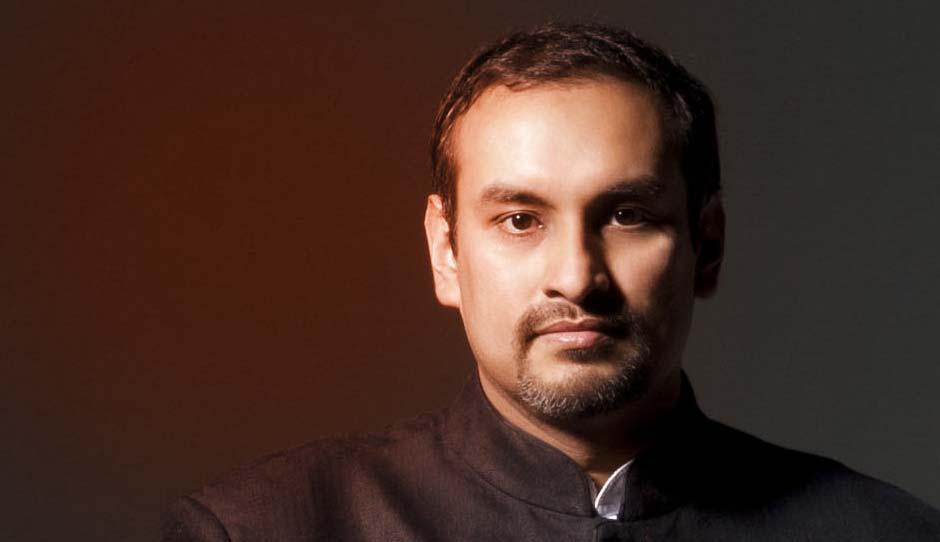
It’s surprising that Namit Malhotra, co-founder and CEO of Prime Focus should call himself an underdog. Prime Focus, a global visual entertainment services company, counts Warner Bros, James Cameron and Walt Disney Pictures as its clients, had revenues of Rs762 crore in 2012-13, and has offices in 14 cities in six countries. Yet, Malhotra insists that he feels as insecure and ambitious as he did when he started a small editing studio for television production as a 18 year old from his father’s garage in Mumbai in 1995.
It didn’t take long for Prime Focus to be a leading force in advertising, films and television with projects such as Boogie Woogie, Ram Gopal Varma’s "Satya" and Sanjay Leela Bhansali’s movie "Black" to its credit. En route to this growth, Malhotra and his co-founders Merzin Tavaria, Prakash Kurup and Huzefa Lokhandwala went public in 2006 and raised Rs100 crore at Bombay Stock Exchange. They used the money to buy companies in the UK, the US, Canada and five more across India. By 2008, Prime Focus had 17 offices, almost 1,200 employees and income of Rs232 crore.
But, the big twist in their seemingly fairy tale business journey was waiting for them. After twelve years of progress, as Prime Focus was establishing itself in the global market, the world seemed to fall apart forthem. In November 2007, there was a four-month long Writers’ Strike across the United States. The strike totally grounded the film, television and radio industry. There was no business for six to seven months. And, even as the impact of the Writers’ Strike hadn’t completely ended, there were worries about a similar strike by the Hollywood’s Screen Actors Guild. To make matters worse, the US economy went into a tailspin after the collapse of Lehman Brothers in September 2008.
I used to think that I had the best plan in the world. But, with the crisis, it felt as if the ground under our feet disappeared." - Namit Malhotra
The companies I had bought went into deep losses. The price of our stock fell,” remembers Malhotra. It led Prime Focus down a tough, intense phase of restructuring, rebranding, downsizing and several difficult conversations with the team.
“I used to think that I had the best plan in the world. I had de-risked myself by having offices worldwide and across three segments of the media industry. If one country or one business wasn’t going well, there would always be another part where work would boom. But, with this crisis, it felt as if the ground under our feet disappeared,” reminisces Malhotra. “
“I actually became the perfect underdog because I lost it all,” he adds. The climb back up needed him to be scrappy and nimble all over again. In 2009, Malhotra decided to bring all Prime Focus companies under one brand and institute a uniform culture. The frenetic acquisitions had led to a top-heavy company with too many management styles.
“Integrating seven separate companies was the hardest thing I’ve ever done. We had to make sure that for each of these companies we were leveraging their benefits and minimising the weaknesses.”

Prime Focus brought in management consultants to travel to each of their 17 offices in four countries, and ask about the values, work styles and culture that each office cherished. Malhotra wanted the integration process to be as democratic as possible because he didn’t want to bulldoze a new order on them. This integration process took nine months, and led to the creation of three subsidiaries—Prime Focus World (the creative arm with a focus on 3D content conversion, visual effects, animation), Prime Focus London (offering post production services) and Prime Focus Technologies (providing unified multi-platform content operation solutions).
On September 29, 2009, Prime Focus re-launched their brand at a huge event with 700 people at London’s Leicester Square. They launched their two offerings—View-DTM (Prime Focus’s proprietary 2D-to-3D conversion technology) and CLEARTM (the company’s hybrid cloud technology-enabled media ERP platform media). They did a similar event two days later, on October 1, 2009, in the heart of Los Angeles at the famous Fonda Theatre.
One of their early projects was adding visual effects and using View-D capabilities in James Cameron’s blockbuster movie Avatar. The movie released in December 2009. Its spectacular box office revenues of $2,782 million helped Hollywood spring back into action. Avatar’s success also opened the doors for 3D technology. Warner Bros wanted to convert Clash of the Titans into 3D. Malhotra promised Warner Bros he would deliver the entire movie in eight weeks. “Other vendors offered to do it but they all wanted around eight months or more to do it.”
Malhotra says their knowledge of filmmaking, thanks to their work in the Hindi film industry, was a key strength in their success in 2D to 3D conversion. “Other companies understood the 2D to 3D conversion technology but they didn’t understand the creative process of filmmaking.” The steady inflow of work for 2D to 3D has led to a boom in that vertical. From a team of 50 people in Los Angeles in January 2009, Prime Focus had more than 2,000 people across five offices by June 2011 in their 2D to 3D vertical; and they have worked on mega blockbuster franchises such as Star Wars (Episode I, II and III), The Wizard of Oz and Men In Black 3. Malhotra proudly claims that Prime Focus is the biggest 2D to 3D company in the world today.
Even though Prime Focus closed FY2014 with approximately Rs800 crore, Malhotra says his affinity to being the “underdog” keeps him going. “Many companies compete with us. Prime Focus is their biggest competitor. I don’t think they know that I compete with each of them as well. In my mind, I’m constantly up against all of them. It’s what keeps me going.”























Add new comment