



How Paper Boat Packages Childhood Memories
- BY Sonal Khetarpal
 In Sales & Marketing
 20417
20417 0
0
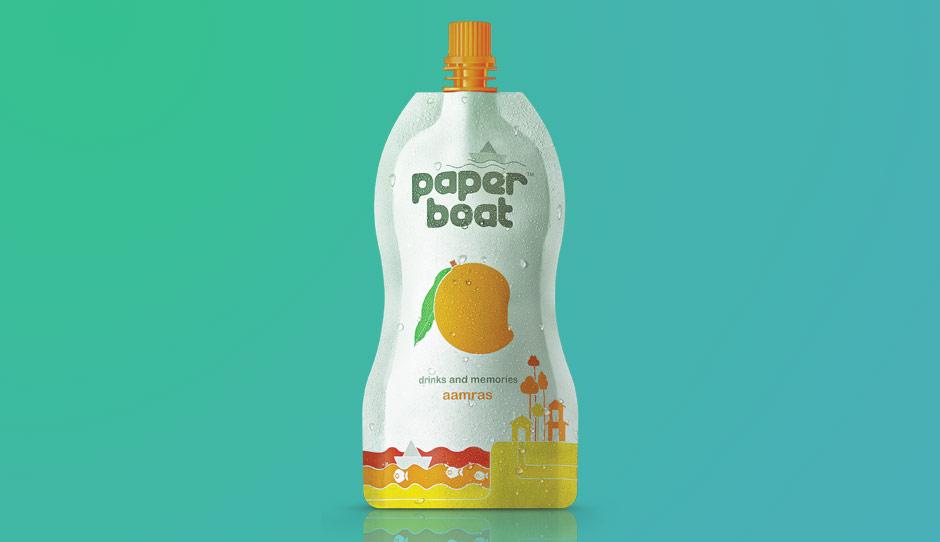
The power of storytelling has gained much currency in the world of management and company building. Brand strategists and marketers say it can be the difference between a good brand and a great one. Effectively using the art of storytelling to create a brand pull isn’t an easily won virtue though. Hector Beverages, a Gurgaon-based beverages company, seems to have been able to spin quite a profitable tale for Paper Boat, its range of traditional Indian drinks.
Co-founded by Neeraj Kakkar, James Nuttall, Neeraj Biyani and Suhas Misra (who recently left the company), Hector Beverages’s flagship product was the energy drink Tzinga that it launched in March 2012 and which now sells more than 1.5 million packs a month throughout India.
After Tzinga’s launch, the trio wanted to expand their product portfolio of functional beverages. They obviously didn’t want to launch another cola flavoured drink and compete with bigwigs such as Pepsi and Coca-Cola. They knew success wouldn’t come from cluttered categories; they were scouting for drinks at the periphery of the mainstream beverage market.
Many of their “what next” product brainstorming sessions would happen during the lunch break in their Gurgaon office. Misra and Kakkar brought in lunch from home while Nuttall would order in food. Every lunch hour, there was a constant bone of contention between the three co-founders—who will get the biggest share of the "aam panna" that Misra’s mother would dutifully send everyday in the summer heat of May 2012.
Nuttall once asked if he could buy "aam panna" from the market. Their inability to come up with a positive answer led to a breakthrough moment. Nuttall suggested they should launch aam panna in ready-to-drink packs—to give the desi concoction the packaging of a modern drink. “As Indians, we take these traditional beverages for granted. We never thought it could be bought from the market. They have always been prepared, generation after generation, at home. But, James, the non-Indian, spotted a business potential in these homemade drinks,” recalls Kakkar.
As Kakkar started thinking about this idea, he realised he missed the "kaanji", fermented purple carrot and mustard drink his grandmother used to prepare. Unfortunately, nobody else in the family knows how to make this drink, Kakkar says. He realised that the kaanji can be saved from similar extinction across many homes it if becomes commercially available.
Kakkar and Misra set out to test their hypothesis of there being business merit in reviving these drinks—the friends they polled agreed enthusiastically that it was a smart idea. Thus began the journey of their new brand of drinks, which they called Paper Boat.
Interestingly, even before the brand was conceptualised, it already had a story around it—of memories and of the simple tastes of the past that we miss in today’s fast-paced world.

You can’t stop at telling a story. What is more important is whether the brand can associate with your story?
MarketGate, a brand and business strategy consultancy firm was brought on board to help the co-founders elaborate on their brand ethos and brand positioning based on this concept. Shripad Nadkarni, founder, MarketGate Consulting said Hector was aware of the need to appear contemporary despite their traditional drinks. “We wanted Paper Boat to evoke fond memories of the bygone era in a present day context,” says Nadkarni. The idea they wanted to communicate was that even though life might no longer be simple, it certainly has changed for the better in many ways—greater connectivity, health care, infrastructure. “We wanted the brand philosophy to look at the past fondly but to also say that “life is still beautiful”.
This idea of the simple, familiar past also tied in well with the contents of the drink. Kakkar says, “these are simple, uncomplicated drinks where all the ingredients are familiar since these have always been made at home for generations— unlike the chemical “secret” concoction of carbonated drinks.” Also, they are completely natural, without any artificial flavourings and additives.
The brand’s strong ethos helped the founder trio define their core audience— the young adult who is working, always running on a treadmill and would’ve had these drinks in the past, probably when growing up. They were apprehensive about limiting their target consumer by defining it as a young demographic. But, we figured Coke and Pepsi also target the age group of 18-25 and it is still consumed by people of all ages; beverages do tend to have a narrow core audience, explains Nadkarni.
The next logical step was to find the perfect name for the new range of drinks. Ashwini Deshpande, co-founder of Elephant Strategy + Design who designed the packaging came up with the name Paper Boat. Deshpande says she got the idea from Jagjit Singh’s gazal, "Woh Kagaz Ki Kashti". The song re-creates the whole world of the simple past in the listener’s mind—a world full of imagination and the stories grandmothers tell. “It symbolised everything we were conveying. Making paper boats is such an innocent joy—we’ve all done it as children for the sheer joy of creating something,” she adds.
The team did mull over another option for the name—good ol’—the colloquial American term for old-world charm. Eventually, Paper Boat won over, mainly because of the universality of the concept and the immense potential of personal stories getting attached to the concept. “A brand is successful if it can tell you a story you can associate with. But, you can’t stop at telling a story. What is more important is whether the brand can associate with your story. The customer matters more than the brand. Paper Boat did that—it’s a place which encourages you to revisit your childhood stories,” says Deshpande.
With the name decided, the team at Elephant started working on Paper Boat’s packaging. Deshpande says three key words guided the design—simple (known ingredients), goodness (health benefits) and delight (joy of drinking). The main challenge, Deshpande says, was to communicate the brand philosophy by keeping design elements to a minimum. “It is extremely difficult to make something look simple and yet communicate a lot through it,” she says.
A brand is successful if it can tell you a story you can associate with. But, you can’t stop at telling a story."- Ashwini Deshpande, Elephant Design
Kakkar says although they were sure that people would appreciate the high quality of their "aam ras" or "jaljeera" (the first two flavours they introduced), they were apprehensive whether they would be willing to pay thrice the amount for what a roadside hawker charges. Since, it was for the first time such drinks were going to be available in organised retail, the cofounders wanted to ensure it would be accepted by consumers. Instead of adopting an aggressive marketing strategy, the trio decided to leverage on word-of-mouth. They wanted to understand if consumers would discover and appreciate these new flavours on their own. They took the route of limited distribution. But, they did so by entering into high-profile associations with Jet Airways and IndiGo Airlines. Air travel has become frequent among the upper middle class which Hector had identified as their key influencer community, mainly because this segment isn’t as price-conscious. Also, they tied up with modern trade stores such as supermarket chain Food World, HyperCity, Nilgiris and Namdhari’s Fresh and placed it in 500 stores across four Indian metros. “We wanted consumer to discover the product from the shelves themselves and modern retail is a very conducive environment for people to experiment. Consumers can pick and choose themselves. In mom-andpop stores the shopkeeper comes in between the product and the consumer,” says Nadkarni.
What they also did was create a Facebook page for Paper Boat. They didn’t really talk about Paper Boat but started discussing childhood memories—the games that were played of "raja, mantri, chor, sipahi" or hopscotch or "Flames". The page is built around their philosophy that “life is still beautiful”. This generated a lot of buzz around the drink.
By June 2013, Hector Beverages was selling 5,00,000 units per month. The great response pushed them to increase the production capacity of their Manesar plant. By September 2013, they began work on a second manufacturing facility. The pace of sales kept up, and the company launched four new flavours— kokum, kala khatta, aam panna and gol gappe ka paani—by the end of 2013. Kakkar though is eagerly waiting for the kaanji of his childhood to be launched soon, which he says should happen within the next couple of months.
























Add new comment