



How Dhanuka Agritech Sowed the Seeds of Growth
- BY Shreyasi Singh
 In
In  11368
11368 0
0
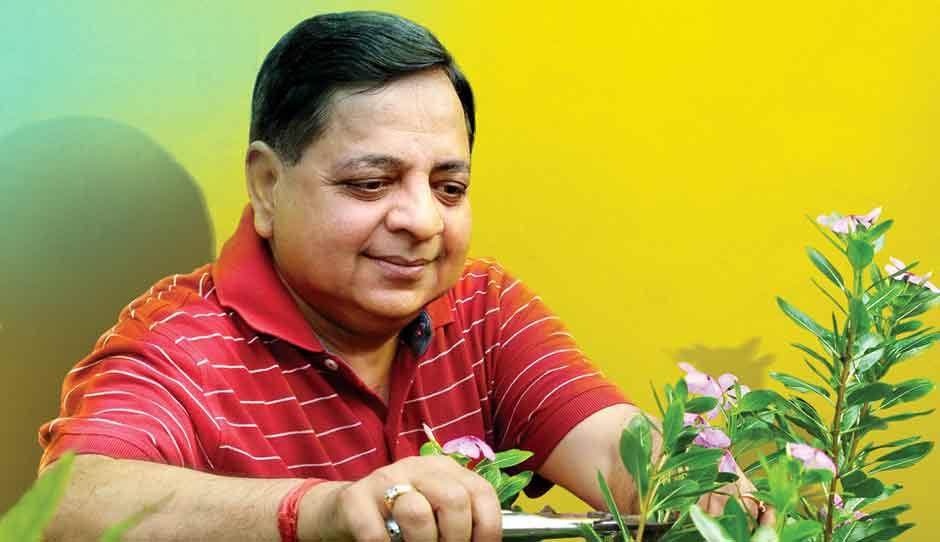
Gurgaon-based Dhanuka Agritech, an agro-chemical and seeds company, doubled its turnover in the three-year period between 2008 and 2011, from Rs250 crore to Rs500 crore. It’s a run that M.K. Dhanuka, the company’s MD and co-founder, is confident it can continue as he looks ahead to harvesting revenues in the range of Rs1,000 crore by 2015-2016. Even as the company looks ahead, Dhanuka, who co-founded the company with his elder brother R.S. Agarwal, tells us how it all began, why pesticides are so misunderstood, and what the next decade looks like for them.
Our ancestral business was in textile, and we would mostly import from Manchester. When my elder brother finished his graduation, he said he wasn’t interested in a business that was based on long credit cycles. So, he started a different line—trading in fertilisers and pesticides. After I got my bachelor’s degree, I joined him too. We began our first office in Hyderabad, and introduced a few north Indian pesticide companies in the South. Andhra was the biggest market for pesticide consumption then. Farmers would travel from there to Delhi with cash to buy pesticides, and take it back. We got good success in our foray into the South. In fact, so high was the demand that the manufacturing companies couldn’t supply the quantity of orders we’d book with them. It’s then that we began to think about having our own unit instead of being dependent on other companies. In 1980, we got a chance to acquire a sick unit—Northern Indus—which was one of the oldest pesticide units in India, established in 1960.
This move served us well. By the mid-1980s, we had a turnover of Rs7 lakh and three or four molecules in our portfolio. In 1985, we set up Dhanuka Pesticides as a public limited company. Through the 1980s, much like other businesses at that time, finance was our key challenge. Looking back, we could have done much more, and grown much faster if we got that support. But, the real milestone came for us in the early 1990s. In 1992, we launched first molecule by DuPont in India. Our aim always has been to introduce global standards in India. In any case, coming up with a new molecule isn’t really something our industry is ready for even now. To come up with a new molecule, you need to spend Rs10,000 crore and Indian companies in the agricultural sector don’t have that kind of revenue even right now. But, international companies can’t navigate in India alone because we are a country of six lakh villages. They want to have strong partnerships with local partners who can give them access to respectable market share. We’ve been successful in doing that. We have partnerships with leading global companies such as DuPont, Sumitomo Chemicals and Nissan Chemical Industries.
When you work with the principle that business is about the exchange of value, not the exchange of product for money, mutual benefit and growth is guaranteed.
Even now, educating farmers is a key focus area for us. In fact, we now have nearly 1,500 BSc and MSc graduates who do this across the country. We have to counter many misconceptions about pesticides. Sample some facts. India has 148 million hectares of cultivable land. On the other hand, China has 128 million hectares of cultivable land. But their production is more than double of ours. Last year, India recorded its highest production of food grains at 257 million tonnes. In comparison, China produces more than 500 million tonnes. Right now, our consumption of pesticides is one of the lowest in the world. Taiwan is at the top, followed by Japan.
Even though NGOs advocate organic farming, it’s a debate that needs to be put into context. If you think about it, all the three agri inputs—seeds, fertilisers and pesticides—are equally important for agriculture because if a farmer spends on the first two and the crop dies because of pests, he incurs a huge loss. Moreover, if we look at the bigger picture, we add two crore people to our population each year—that’s like adding one whole Australia. Plus, our cultivable land is dwindling because of urbanisation so we can’t afford to produce less right now. Having said that, there is no doubt that pesticides must be used in moderation because ultimately, they are poison. We are not against organic agriculture. We welcome it, in fact. But, it’s not a very relevant debate, given the sheer number of mouths that need to be fed in India today.
In fact, the next ten years look very exciting. There is huge opportunity in agriculture. As I mentioned, India has one of the lowest pesticide uses. Barely 35 per cent of all Indian farmers use pesticides. Add to that the rising demand of India’s growing middle-class because of rising levels of income. It wants more nutritious foods, vegetables and poultry.
Things look good for Dhanuka on the management side too. We have three members of the second generation—both of my sons, and my brother’s son—working with us over the past few years. More than anything else, I hope, our next generation has the perseverance and patience to keep upgrading our portfolio of molecules. It isn’t easy. Pesticide is a highly regulated industry in India. Each new molecule takes two to four years of trials before it can be introduced in India. Actually, if you’re lucky, you can get your registration in four years. Yet, we are spending a large amount of money in getting these new registrations because the newer molecules are more eco-friendly and require lesser quantities of chemicals to be used. In the next two years, we plan to launch two new molecules that are both under trial at present. With these molecules introduced, we aim to be an Rs1,000-crore company by 2015-2016. I think we’re well on our way to getting there, as long as the monsoon stays on course.
























Add new comment